Why Custom Furniture Is Different in Mexico
· Centinela Studio
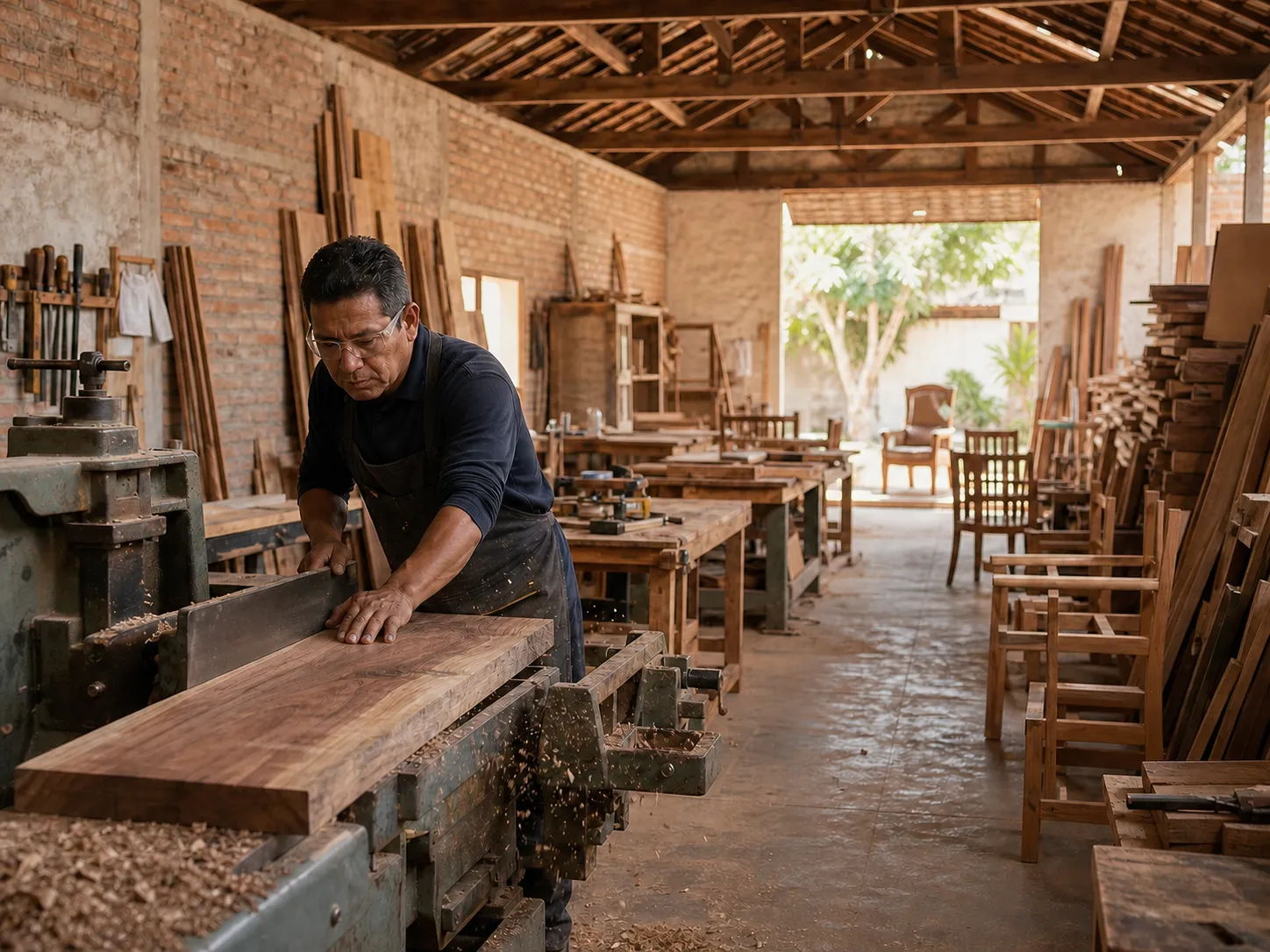
The single most surprising discovery for new arrivals furnishing a home here: a custom sofa — your dimensions, your fabric, built by hand in a Guadalajara workshop — is part of a living local tradition rather than an exception. There are catches, but they are not the ones people expect. Here is how the workshop economy really works, from a studio that commissions from it weekly.
Why is custom work affordable here?
Because Mexico never lost its workshop economy. In many places, custom furniture has become a rare specialty because the industrial base around it disappeared. In Guadalajara, Oaxaca, and the Bajío, furniture-making is a living industry: frame-builders, upholsterers, finishers, hardware forgers, all operating at scale, all accustomed to made-to-order as the normal way furniture happens rather than the exceptional one.
The result is a culture where “custom” is not unusual. Skill is abundant and workshops collaborate across specialties. A made-to-measure walnut dining table for a colonial sala is shaped by the wood, the craft, and the proportions of the room.
Where are the real catches?
Lead time is real. Six to ten weeks for upholstered work is normal; carved or forged commissions run longer. Workshops run at the pace of the queue, not the pace of your closing date. (This is why our Tier 2 timeline builds procurement in weeks four through ten — the calendar is shaped around the workshops, not against them.)
Quality variance is real. The best workshops here rival anyone on earth. The worst will confidently deliver a sofa whose frame is stapled softwood under handsome fabric. From the showroom floor — or an Instagram feed — you cannot tell which you are dealing with. Knowing which workshops hit deadlines and standards is precisely the local knowledge a studio sells.
Deposits run on trust. The workshop economy runs on relationships and word. That works beautifully inside the web of ongoing relationships — and badly for a one-time foreign buyer with no repeat business to offer and no Spanish to chase a late order in.
“Custom” needs a real brief. A workshop builds what the drawing says. If the drawing is a phone photo and a gesture, you will receive an interpretation. Dimensioned drawings, fabric specs, finish samples — the brief is where a commission succeeds or fails, weeks before anyone touches wood.
When is custom NOT worth it?
An honest list, since we make part of our living commissioning custom work:
- Rental properties. Guests do not tip for joinery. Tier 1 uses proven, durable, replaceable pieces on purpose — when a guest breaks a chair, the property manager reorders it from the inventory list, no workshop queue involved.
- Standard-proportioned rooms. Newer construction with normal ceilings accepts well-chosen ready-made furniture happily. Custom earns its keep where architecture is irregular — which, in colonial San Miguel, is most of the interesting housing stock.
- Deadline-critical single pieces. If one commissioned piece gates your move-in date, buy the excellent available piece instead. Never let one workshop queue hold a household hostage.
What does this mean if you are furnishing a whole house?
The advantage of the Mexican workshop economy is operational: someone still has to brief precisely, choose workshops wisely, inspect before accepting, and sequence thirty vendors into one install week. Do that yourself and the project management is yours too. Or it can be handled through a turnkey service, where the workshops, sequencing, and accountability come attached to a reveal day.
Either way, the furniture in your San Miguel home can be built for your rooms by name-able hands. That is the best reason to furnish a home in this country.